5 Ingredient Dutch Oven French Bread


Active Time: 20 Minutes | Cook Time: 45 Minutes | Total Time: 12+ Hours

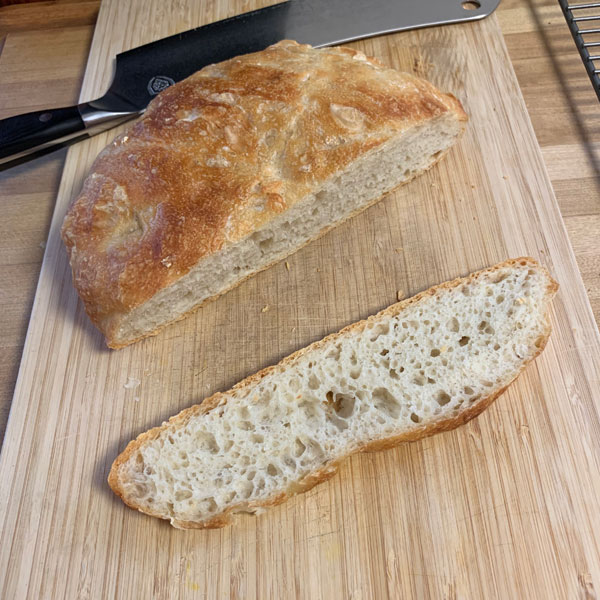
This is a super easy French Bread recipe with minimal ingredients. Done correctly it achieves a wonderfully crusty bread with a great texture, full of beautiful bubbles, and better than anything you can buy at your local grocery store!

A note before you continue with this recipe: I used a few things that you may not have handy, specifically a Kitchenaid Stand Mixer, a food scale, and a probe thermometer. These definitely made it easier to make this bread, but you should do fine without them with some adjustments.
Ingredients

  • 375g All Purpose Flour (about 3 cups)
  • 2 1/4 Teaspoons Active Dry Yeast (or one packet)
  • 300g Warm Water (about 1 and 1/4 cup)
  • 10g Kosher Salt (about 1 and 1/4 teaspoon)
  • 1 Teaspoon Sugar

Equipment / Supplies

  • Stand Mixer (recommended, not required)
  • Kitchen Scale (recommended, not required)
  • Probe Thermometer (recommended, not required)
  • Cast Iron Dutch Oven - 4.5qts (#8) or larger
  • Parchment Paper
  • Plastic Wrap
  • Clean Kitchen Towel

Instructions

Preparing the Dough

  1. Add the 300g or 1.25 cups warm water to the bowl of your stand mixer or a large mixing bowl. You want the water to be between 100-110 degrees fahrenheit when you add the yeast, so this is where a probe thermometer comes in handy
  2. Add the sugar, salt, and yeast to the water, give it a very gentle stir to ensure it mixes in well
  3. Allow 5-10 minutes for the yeast to proof. You should notice bubbles or foam forming if the yeast is activating. If you aren't seeing any change to the surface your yeast may be dead or your water may have been too hot or too cold
  4. After your yeast has begun to show signs of life, stir in the flour
  5. Once the flour has been added to the bowl, set your mixer to the stir setting for about 5 minutes, occasionally scraping the dry flour off the sides of the bowl to ensure it is fully incorporated. If you don't have a stand mixer you can mix and knead the dough by hand for about 10 minutes until there is no dry flour left. Keep in mind, this is a fairly wet dough, it may seem like it needs more flour but don't worry, it doesn't!
  6. Place a clean kitchen towel over the top of the bowl and set it somewhere warm to rise, undisturbed, for 1 hour
  7. After the 1 hour first rise is complete, generously flour your hands and a cutting board and transfer the dough from your bowl to the board
  8. Sprinkle a small amount of flour on top of your dough to help prevent sticking
  9. Using your hands, gently pull the dough out at the edges and fold back in, creating a nice ball shape. This should only take about 4 pulls and folds, you are just giving it a basic shape at this point, not kneading it
  10. Cut out a sheet of parchment paper large enough to line your dutch oven, but instead put it into a large metal mixing bowl
  11. Place the ball of dough into the mixing bowl on top of the parchment paper. Some people say to do this folded side up to give the bread a more interesting shape on top, but I don't care either way
  12. Tightly cover the top of the bowl with plastic wrap. I used 2 layers and a rubber band to hold it on tight. If you don't have a rubber band you can wrap an extra layer around the edge of the bowl to make a good seal
  13. Place in the refridgerator overnight. I usually leave it for 8-10 hours
    Note: I will be updating this soon with instructions that don't require an overnight trip in the fridge

Baking

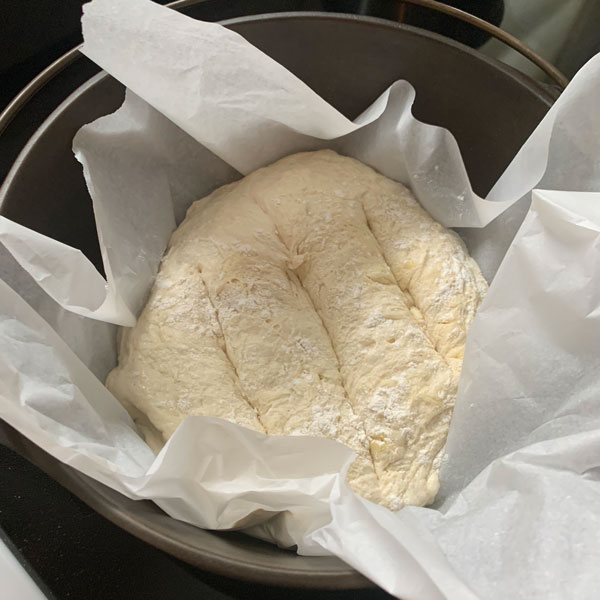
  1. Take the dough out of the fridge an hour before you are ready to put it in the oven. You will notice it has risen significantly and should have large bubbles on the surface. Leave it on your counter during this time to allow the temperature to rise a bit before baking
  2. Place your dutch oven into your oven and pre-heat to 465 degrees fahrenheit
  3. After the dough has sat at room temperature for one hour and the oven is pre-heated, carefully remove the hot dutch oven from the oven and remove the lid
  4. Using two corners of the parchment paper, lift the dough out of the mixing bowl and transfer (with the parchment paper) into the dutch oven
    Note: Do not punch down the dough! We want those lovely bubbles all throughout the bread, punching the dough down at this point would destroy them
  5. If you'd like, sprinkle some extra flour, sesame seeds, or any other seasoning on top, and score with a razor if desired
  6. Place in the oven with the lid on and allow to bake undisturbed for 35 minutes
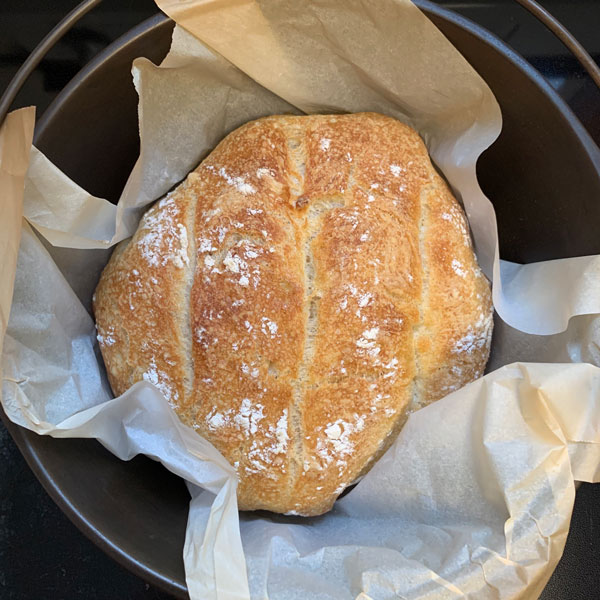
  7. After 35 minutes, remove the dutch oven lid and allow to bake for an additional 15 or so minutes, or until the top looks nice and golden brown and crusty
    Note: Every oven is different. Just like seasoning cast iron, you may need to expirement to find the exact time and temperature that works for you
  8. Once the bread looks finished, remove the dutch oven and carefully lift the bread by the parchment paper out of the dutch oven and transfer to a metal rack for cooling. If you don't have a rack you can just let it cool on a cutting board
  9. Wait 20-30 minutes before cutting
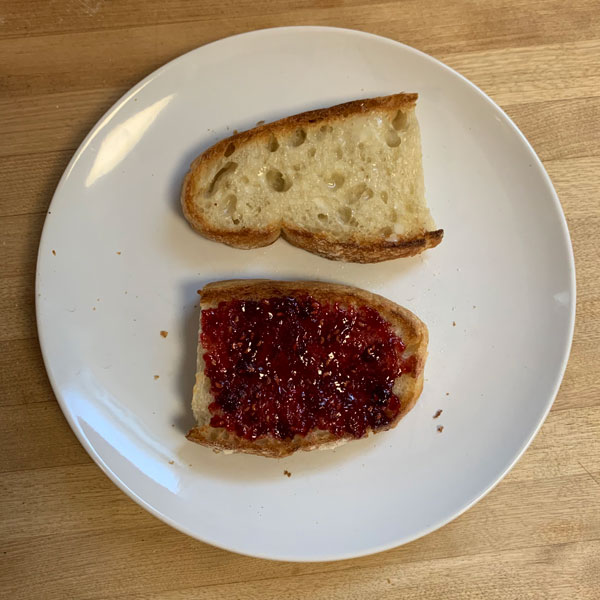
  10. Slather in butter, preserves, whatever you want, and eat your delicious homemade bread!